Creative Strategy
Iteration Testing
Company
ConsumerAffairs
My Role
Associate Creative Director
Tools
Excel Motion Milanote
Timeline
Q2 2026
Description
Translating data into high-performing video and static assets.
Context
Effective performance creative strategy isn't about making great ads — it's about building a system that consistently surfaces what to make next. A clear Creative Strategy keeps the team operating proactively — with a clear, data-informed view of what's in market, what's coming, and what the performance signals are telling us to prioritize.
Challenge
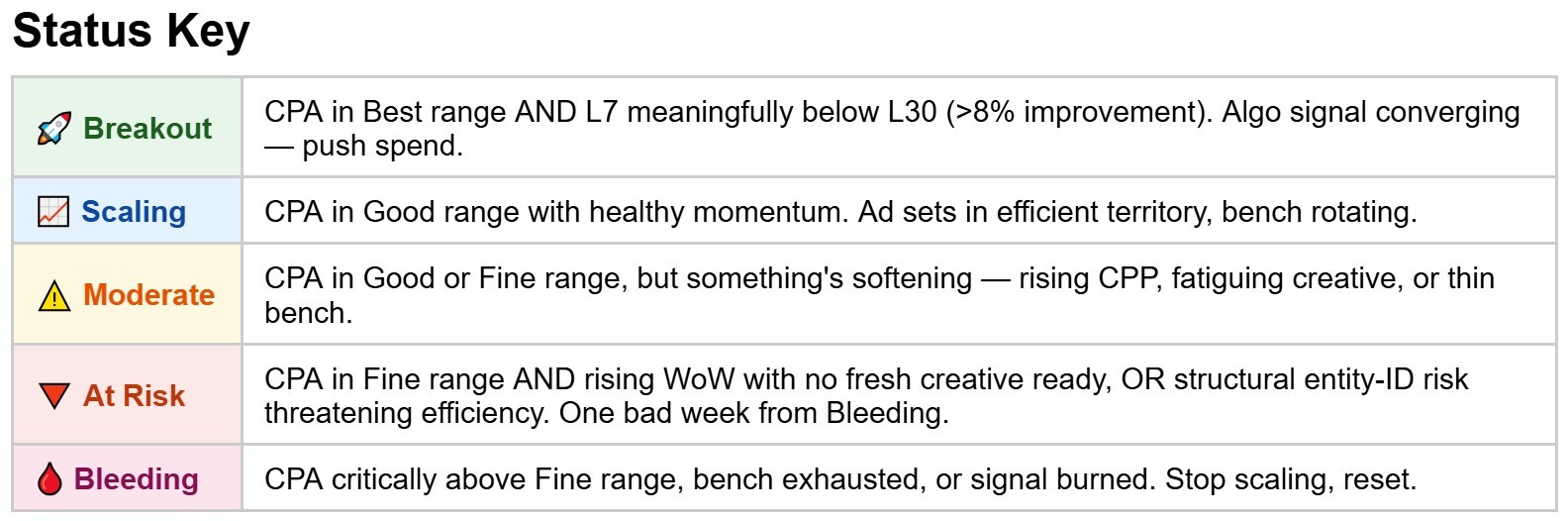
Most creative teams operate on instinct and momentum — running concepts that feel right until the numbers force a change. The problem is that by the time performance degrades visibly, you've already lost ground in the auction. Without a structured system for scheduling, tracking, and refreshing creative across multiple categories and asset types simultaneously, teams default to over-indexing on top performers and under-investing in the diversity and volume that Meta's algorithm actually needs to optimize efficiently.
Process
Creative strategy moves through five stages each week:
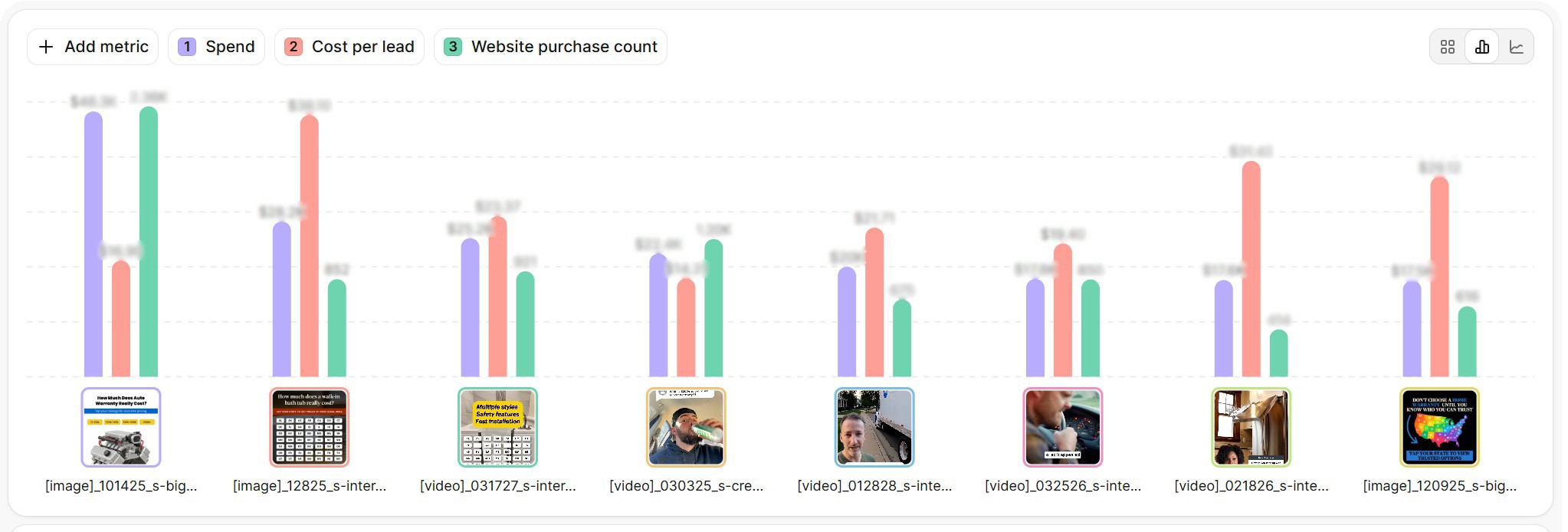
Performance review. Every week, a Top Performing Ads report is pulled from Motion, aggregating CTR, CAC, ROAS, and engagement signals across our Meta ad account to identify what's winning, what's fatiguing, and where the gaps are.
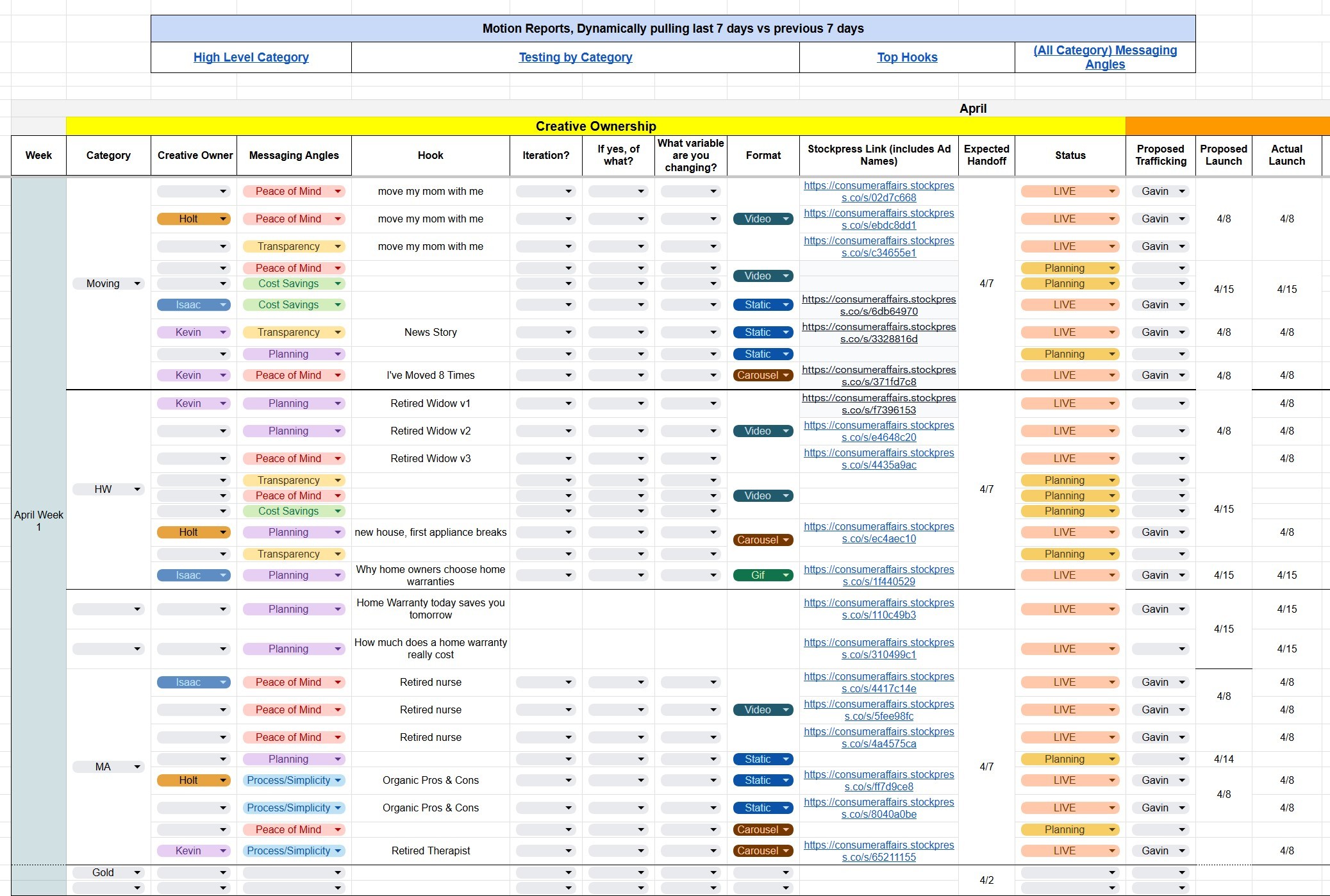
Tracker refresh. Insights from the weekly report are used to update the monthly creative tracker — adjusting category priorities, asset types, and messaging angles based on live performance data rather than assumptions.
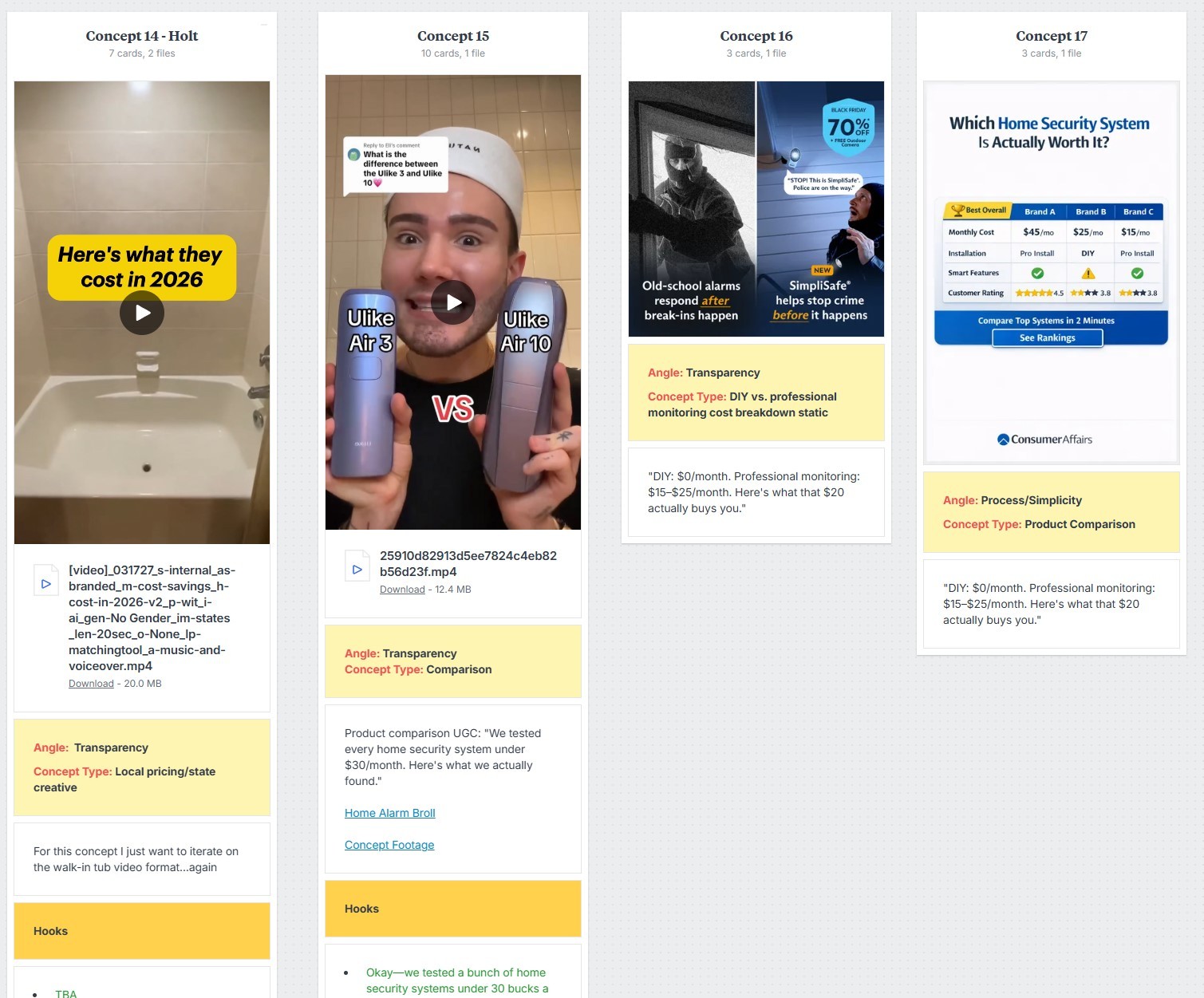
Brief development. Prioritized concepts are developed into structured creative briefs inside Milanote, translating performance signals and audience insights into clear direction for hooks, messaging angles, formats, and visual approach.
Competitive analysis. Each brief is stress-tested against competitor ads running in similar or adjacent categories — identifying whitespace opportunities and ensuring our angles aren't blending into the broader market.
Production handoff. Approved briefs move into production with enough strategic context baked in that creative execution stays aligned to the original hypothesis — maintaining the connection between data insight and final asset.
Solution
The tracker-driven system created the strategic infrastructure that made everything else scalable. Categories launch with intention rather than improvisation. Asset types are distributed across the funnel based on where performance signals indicate opportunity. Messaging angles are rotated with enough frequency to stay relevant in the auction while building cumulative learning over time. The result is a creative program that doesn't just react to performance data — it anticipates it.
Key Insights
Volume at scale isn't just a distribution strategy — it's an algorithmic one. The teams winning in Meta's auction aren't just running more ads. They're running ads that are different enough, across enough dimensions, that Meta never stops learning.